Research and Best Practices


This two part rubric and worksheet is for use by individuals responsible for monitoring (1) district-level capacity to support response to intervention (RTI implementation and (2) district-wide fidelity of RTI implementation.
Domain Resources
Rural Alaska Principal Preparation and Support (RAPPS)
RAPPS is a comprehensive leadership development program focused on preparation of principals for high poverty and remote Alaska schools, and support for those who are currently serving in those schools. The program consists of three components: 1) preservice, 2) induction, and 3) training and technical assistance for principals in high need districts.
Funded by the US Department of Education: School Leadership Grant Program (CFDA#84.363A)
District RTI Capacity and Implementation Rubric and Worksheet
This two part rubric and worksheet is for use by individuals responsible for monitoring (1) district-level capacity to support response to intervention (RTI implementation and (2) district-wide fidelity of RTI implementation.
Prevent Dropout with an Early Warning System
This resource provides an overview of the Early Warning System tool and process, which is designed to support students who are at risk of dropping out of school with both school-wide strategies and targeted interventions. It provides background information, an implementation guide, and both a high school and middle school tool to identify and monitor students at risk of dropping out of school
Improving K-3 Reading Comprehension
The Center on Instruction has published a series of four Improving K-3 Reading Comprehension professional development modules designed to provide key principles and practices that support classroom instruction. Each module provides resources useful to federally funded School Improvement Grant (SIG) programs. The webinar modules introduce the Center on Instruction (COI) and Doing What Works (DWW) websites' tools and resources and address 1) the supporting research, 2) teaching comprehension strategies, 3) engaging students with text, and 5).....
Improving Adolescent Literacy in Rural Schools: A Schoolwide Approach
This is the second in a series of webinars especially designed to assist rural school staff with implementation of their School Improvement Grants (SIGs).
The intended audience for this webinar includes all educators engaged in or interested in improving literacy instruction for adolescents—grades 6–12. The presenters were Dr. Debby Houston Miller and Vicki LaRock from the Center on Instruction's Literacy Team. During this one hour webinar, presenters focused on the following guiding questions:
What are the major goals of adolescent.....
Screening for Mathematics Difficulties in K-3 Students - Second Edition
This second edition of Screening for Mathematics Difficulties in K-3 Students which was originally published in 2007 updates the document with new research in the assessment field in developing valid and reliable screening measures for early mathematics difficulties. It focuses on valid and reliable screening measures for students in kindergarten and first grade but also examines data on screening tests for second and third graders, since the goal of screening is to identify students who might struggle to learn mathematics during their initial.....
eLearning Module from EED: Alaska Steps Toward Educational Progress and Partnership (STEPP)
This course is for school and district staff participating in Alaska STEPP. The course is organized into 17 chapters. The first chapter is an overview of the purpose and process of Alaska STEPP. The remaining 16 chapters outline other specific details in navigating STEPP and applying it to the School and District Improvement process.
1. To access this course, you must first login as a user at www.eed.state.ak.us/ELearning/
2. After successfully logging in, you will see a Welcome page. On the right hand side of the page is a link for.....
The English Language Learner KnowledgeBase
This English Language Learner KnowledgeBase website is an online database of resources supporting education professionals in the administration of programs and instruction for ELLs. Its resources are identified for four categories of users: Program Administrators, Teachers, Parent Advocates, and Educators of Migrant Students.
This resource pertains to the following topics:
English Language Learning
Special Populations
Research: Meta-analyses and Summaries
Practitioner Guides
PD Modules and Training Materials.....
Collaborative Meetings
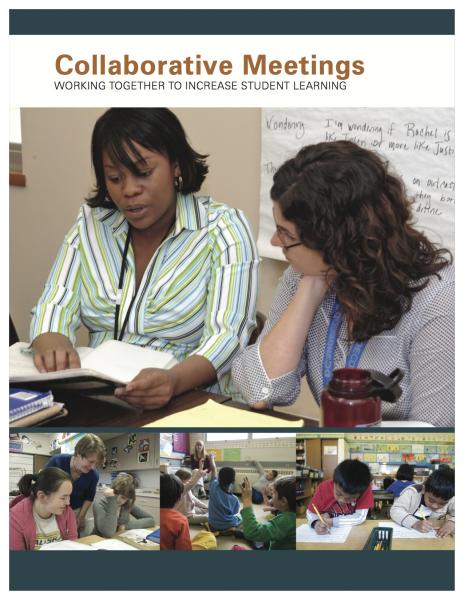
Based on the research literature, this guide was developed specifically to support Alaska educators’ efforts to increase student learning by meeting together to collaboratively monitor the progress of their students, assess students’ learning needs, and decide how to tailor instructional practice in response to those identified needs. There is a DVD that accompanies this guide that.....
Behavior and Classroom Management: Online Professional Development Modules and Resources for Implementation
Are you concerned about how to implement and sustain classroom management and behavioral interventions? This webinar will highlight the free, online professional development modules and resources on Classroom and Behavior Management provided by the IRIS (IDEA '04 and Research for Inclusive Settings) Center for Training Enhancements. Silvia DeRuvo, Senior Program Associate at the California Comprehensive Center at WestEd, and two classroom teachers will discuss how the content of these instructional resources are effective when setting the.....
Using Additional Teacher Collaboration Time to Improve Student Achievement
Teacher collaboration is crucial to improving instruction and accelerating student achievement. In this last session in our webinar series on extended learning time, Ben Lummis, Vice President for the National Center on Time & Learning (NCTL) and Sarah Gallagher, Program Associate at NCTL will share how more time can be best used to improve teacher collaboration and professional development. The session will explore the essential components of productive teacher time through examples of effective practices at both elementary and high.....
Making Choices to Prioritize Learning Time for Students
Do you wonder how districts, unions, and schools can collaborate to create innovative time and prioritize expanded learning time for students?
Budgets, staffing, and negotiated agreements don’t have to place strict limits on the length of the school day. In this third session of a webinar series on expanded learning time, Ben Lummis, Vice President for the National Center on Time & Learning (NCTL) and Sarah Gallagher, Program Associate at NCTL will share a framework for flexibly thinking about resources to maximize the length of your.....
Key Considerations When Measuring Teacher Effectiveness: A Framework for Validating Teachers’ Professional Practices
The report describes three levels of data collection to measure teacher effectiveness both with and without standardized test scores.
Building Teacher Evaluation Systems: Learning From Leading Efforts
This report from the Aspen Institute is part of three reports recently released by the Institute to provide policymakers and education leaders with information on how teacher evaluation and performance management systems work and to use the resulting evaluation results with other information, practices and policy levers to improve teaching and learning. This report is a synthesis of Aspen Institute’s profiles of the teacher evaluation and performance management system efforts conducted by the District of Columbia Public Schools (Teaching and.....
Webinar: Writing and Writing Instruction Improve Reading: What We Have Learned from Research
The Center on Instruction hosted a webinar on April 21, 2011, featuring Dr. Steve Graham, co-author of "Writing to Read", a meta-analysis that examines the influence of writing on reading skills. He presented an overview of the findings and described implications for practice. He also provided specific examples of how writing facilitates reading and reading development. The archived WebEx file can be accessed here. The PowerPoint presentation used during the webinar and a synopsis of the report is available for download below, and the full.....
The Complex Ecology of Response to Intervention
This document contains papers presented by the National Center on Response to Intervention at a structured poster session, “The Complex Ecology of Response to Intervention,” at the American Educational Research Association (AERA) 2010 Annual Meeting in Denver, CO. The topics covered include 1. information on the overall RTI framework, 2. screening and progress monitoring within RTI, 3. delivery of instructional interventions within a RTI system, 4. SLD identification and RTI, 5. implementation of RTI across states, and 6. RTI as.....
Updated Progress Monitoring Tools Chart (National Center on RTI)
The National Center on Response to Intervention announces the updated release of the Progress Monitoring Tools Chart! This chart represents the results of the third annual review of progress monitoring tools by the Center’s Technical Review Committee (TRC).
The chart provides ratings on the technical adequacy of progress monitoring tools used within an RTI context. The tools were rated against standards of general outcome measures, or mastery measures. Additional information on how to implement the tools can be found on the chart as well......
New Updates to the National High School Center's Early Warning System (EWS) Tool v2.0 and Technical Manual
The National High School Center recently released an updated version of the tool and technical manual to better support users as they strive to identify and address issues that lead to students dropping out of school. The updated tool includes a new Export Data feature, and the updated Technical Manual includes several additional instructions, hints, and cautions to help you use the tool. More details on the new tool and Technical Manual are below, along with instructions on how you can easlily transfer your existing data into the new tool......