District RTI Capacity and Implementation Rubric and Worksheet
This two part rubric and worksheet is for use by individuals responsible for monitoring (1) district-level capacity to support response to intervention (RTI implementation and (2) district-wide fidelity of RTI implementation.
Closing the Achievement Gap: Collaborating to Support Student Success
This resource from The Meadows Center for Preventing Educational Risk at The University of Texas at Austin focuses on how educators can collaborate to improve student outcomes and strengthen instruction for students within an RTI framework. In particular, it describes the rationale for promoting collaboration between educators, identifies team members who collaborate, and explores a tool that can be used in collaboration. It can support broader school improvement efforts, including the implementation of School Improvement Grants (SIG), by.....
Using Instructional Routines to Differentiate Instruction: A Guide for Teachers
This publication helps educators plan differentiated instruction using 72 formatted activities called Instructional Routines, which provide a structure for teaching specific foundational reading skills. Included is a table which displays the alignment between the Instructional Routines and the Common Core State Standards organized by the five reading components (phonemic awareness, phonics, fluency, vocabulary, and comprehension).
Improving K-3 Reading Comprehension
The Center on Instruction has published a series of four Improving K-3 Reading Comprehension professional development modules designed to provide key principles and practices that support classroom instruction. Each module provides resources useful to federally funded School Improvement Grant (SIG) programs. The webinar modules introduce the Center on Instruction (COI) and Doing What Works (DWW) websites' tools and resources and address 1) the supporting research, 2) teaching comprehension strategies, 3) engaging students with text, and 5).....
Improving Adolescent Literacy in Rural Schools: A Schoolwide Approach
This is the second in a series of webinars especially designed to assist rural school staff with implementation of their School Improvement Grants (SIGs).
The intended audience for this webinar includes all educators engaged in or interested in improving literacy instruction for adolescents—grades 6–12. The presenters were Dr. Debby Houston Miller and Vicki LaRock from the Center on Instruction's Literacy Team. During this one hour webinar, presenters focused on the following guiding questions:
What are the major goals of adolescent.....
What Makes a High Quality Afterschool Program?
A new policy brief by Denise Huang and Ron Dietel shares findings from nearly 20 years of CRESST research into effective afterschool programs.
eLearning Module from EED: Alaska Steps Toward Educational Progress and Partnership (STEPP)
This course is for school and district staff participating in Alaska STEPP. The course is organized into 17 chapters. The first chapter is an overview of the purpose and process of Alaska STEPP. The remaining 16 chapters outline other specific details in navigating STEPP and applying it to the School and District Improvement process.
1. To access this course, you must first login as a user at www.eed.state.ak.us/ELearning/
2. After successfully logging in, you will see a Welcome page. On the right hand side of the page is a link for.....
The English Language Learner KnowledgeBase
This English Language Learner KnowledgeBase website is an online database of resources supporting education professionals in the administration of programs and instruction for ELLs. Its resources are identified for four categories of users: Program Administrators, Teachers, Parent Advocates, and Educators of Migrant Students.
This resource pertains to the following topics:
English Language Learning
Special Populations
Research: Meta-analyses and Summaries
Practitioner Guides
PD Modules and Training Materials.....
Collaborative Meetings
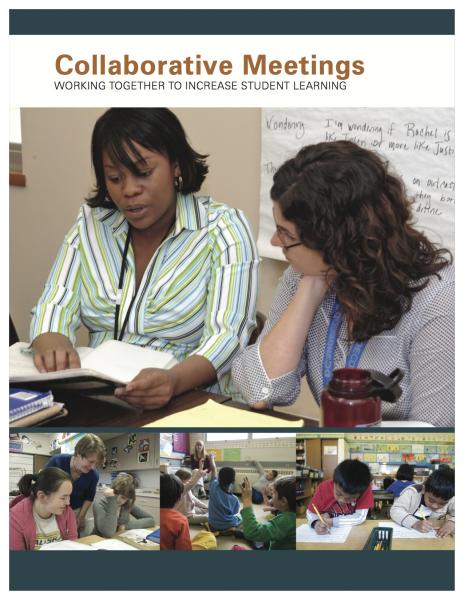
Based on the research literature, this guide was developed specifically to support Alaska educators’ efforts to increase student learning by meeting together to collaboratively monitor the progress of their students, assess students’ learning needs, and decide how to tailor instructional practice in response to those identified needs. There is a DVD that accompanies this guide that.....
Webinar: Writing and Writing Instruction Improve Reading: What We Have Learned from Research
The Center on Instruction hosted a webinar on April 21, 2011, featuring Dr. Steve Graham, co-author of "Writing to Read", a meta-analysis that examines the influence of writing on reading skills. He presented an overview of the findings and described implications for practice. He also provided specific examples of how writing facilitates reading and reading development. The archived WebEx file can be accessed here. The PowerPoint presentation used during the webinar and a synopsis of the report is available for download below, and the full.....
Find What Works

Looking for a better way to find curricula, products, and practices that meet your school or district's needs? Check out the new and improved What Works Clearinghouse (WWC) search feature, Find What Works. This powerful tool makes it easy to find out what rigorous research says about the effectiveness of more than 100 widely used education interventions. You can search for interventions by grade level, subject, delivery method, and other.....
The Complex Ecology of Response to Intervention
This document contains papers presented by the National Center on Response to Intervention at a structured poster session, “The Complex Ecology of Response to Intervention,” at the American Educational Research Association (AERA) 2010 Annual Meeting in Denver, CO. The topics covered include 1. information on the overall RTI framework, 2. screening and progress monitoring within RTI, 3. delivery of instructional interventions within a RTI system, 4. SLD identification and RTI, 5. implementation of RTI across states, and 6. RTI as.....
Updated Progress Monitoring Tools Chart (National Center on RTI)
The National Center on Response to Intervention announces the updated release of the Progress Monitoring Tools Chart! This chart represents the results of the third annual review of progress monitoring tools by the Center’s Technical Review Committee (TRC).
The chart provides ratings on the technical adequacy of progress monitoring tools used within an RTI context. The tools were rated against standards of general outcome measures, or mastery measures. Additional information on how to implement the tools can be found on the chart as well......
COI Webinar Series: Using DWW Resources to Support SIG Grantees in Adolescent Literacy
The Center on Instruction has released a series of five webinar modules designed to provide key adolescent literacy principles and practices to support the federally funded School Improvement Grants (SIG). The webinar modules introduce the Center on Instruction (COI) and Doing What Works (DWW) websites' tools and resources and address 1) school leadership, 2) research overview, 3) explicit vocabulary instruction in middle and high school, 4) text discussion, and 5) intensive interventions for struggling readers. Also included for each module.....
The Impact of Enhancing Students’ Social and Emotional Learning: A Meta-Analysis of School-Based Universal Interventions
This article presents findings from a meta-analysis of 213 school-based, universal social and emotional learning (SEL) programs involving 270,034 [K-12] students. Compared to controls, SEL participants demonstrated significantly improved social and emotional skills, attitudes, behavior, and academic performance that reflected an 11-percentile-point gain in achievement. School teaching staff successfully conducted SEL programs.
Durlak, Weissberg, Dymnicki, Taylor & Schellinger(2011, February)
Child Development, 82(1), 405-432.
Progress Monitoring for Elementary Mathematics (COI)
This PowerPoint presentation from the November 2006 Math Summit: Providing Evidence-Based Practices and Implications of NCTM Focal Points provides an overview of progress monitoring systems that can be used to track student growth in elementary mathematics.
Assessments to Guide Adolescent Literacy Instruction (COI)
This guide from the Center on Instruction is a companion volume to two other COI publications: Academic Literacy Instruction for Adolescents and Improving Literacy Instruction in Middle and High Schools: A Guide for Principals. It provides information about the key elements of a comprehensive assessment plan to improve literacy instruction for adolescents and provides examples of assessments and assessment systems currently in use or under development to improve literacy instruction for students in grades 4-12.
REL Report Identifies Instruments for Measuring Student Engagement
REL Report Identifies Instruments for Measuring Student Engagement
Researchers, educators, and policymakers are increasingly focused on student engagement as a key factor in addressing problems of low achievement, student boredom and alienation, and high dropout rates. As schools and districts seek to increase engagement, it is important for them to understand how it has been defined and to assess the options for measuring it.
This REL Southeast report, Measuring Student Engagement in Upper Elementary through High School: A Description of.....